INTERFACES
CLI, REST /v1, and WebSocket /v1/events/ws expose one coherent control plane.
Karnelian separates identity, session state, memory, model access, execution, and persistence so every authority boundary remains visible and replaceable.
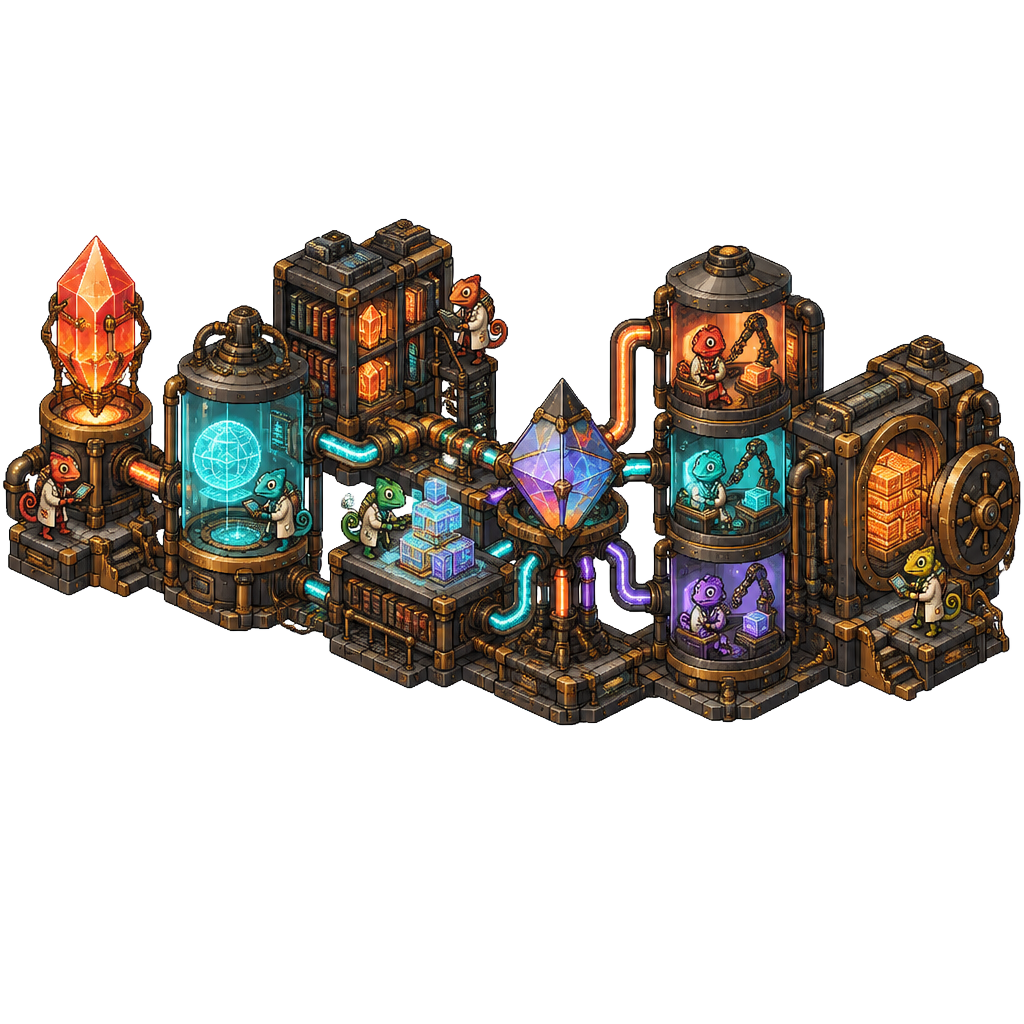
A request passes through a deliberate sequence. Identity and current session state shape context; policy governs model and tool use; outcomes return to memory and the event ledger.
The agent identity defines role, values, behavior, and relationship to the operator.
A durable working thread carries goals and live state across turns.
Relevant knowledge is retrieved rather than dumping an entire history into context.
Mantras, memories, skills, and current state assemble into a bounded prompt.
Policy chooses an eligible local or hosted model path.
Approved capabilities enter isolated specialist runtimes.
Results, events, and compacted context become durable state.
CLI, REST /v1, and WebSocket /v1/events/ws expose one coherent control plane.
Axum, Tokio, and SQLx coordinate tasks, scheduling, sessions, and durable event state.
Policy, approvals, memory, BLAKE3 ledger chaining, and MAGIC entropy remain separate concerns.
Node.js, Python, WebAssembly, and trusted native Rust operations execute declared skills.
A provider-neutral path supports local inference and policy-selected hosted providers.
KRNL OS is the planned Linux-rooted service architecture beneath the shipping Harness.
Elixirs are retrieval-backed knowledge objects with a proposal and approval workflow, quality scoring, mantra links, and context assembly.
The event stream carries task, approval, execution, and system state. High-frequency heartbeat events are sampled so important operator signals remain readable.