RUST CORE
Axum, Tokio, and SQLx support orchestration, event handling, scheduling, and durable state.
Inspect the Axum and Tokio orchestration core, run the Harness locally, build bounded skills, consume the event stream, and help shape the path toward KRNL CLI and KRNL OS.
The canonical public repository contains the Harness and carnelian CLI. Separate CLI and OS repositories will be linked only if public destinations are finalized.
git clone https://github.com/kordspace/karnelian.git
cd karnelian

cargo build --release
karnelian init
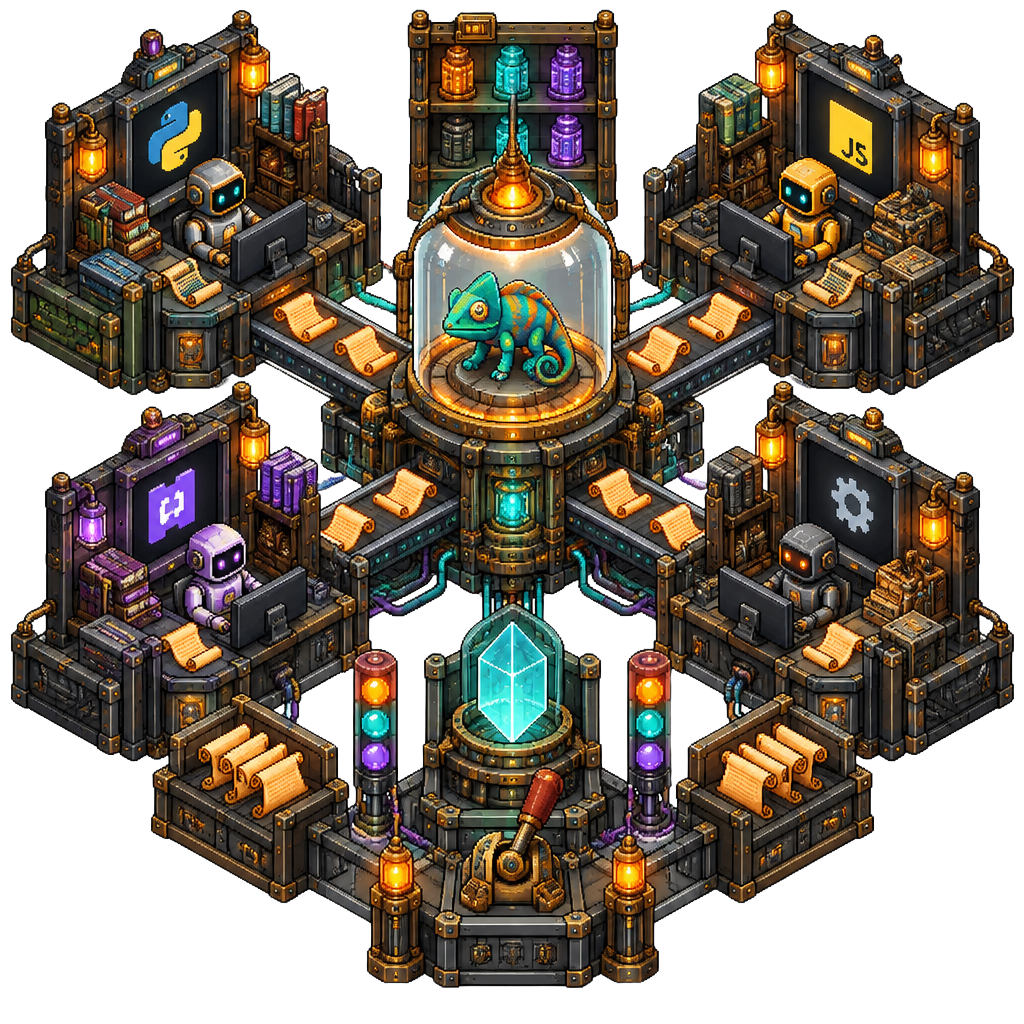
karnelian startA skill declares the runtime, resources, and capabilities it needs. The orchestrator can then resolve policy, request approval, and dispatch work to the correct bounded worker.
Describe inputs, runtime, resources, and required authority.
Refresh discoverable capabilities available to agents.
Deny undeclared powers and request human approval where required.
Execute in Node.js, Python, WebAssembly, or trusted native Rust.
Axum, Tokio, and SQLx support orchestration, event handling, scheduling, and durable state.
Integrate through the /v1 API and follow live execution over /v1/events/ws.
Extend through Node.js, Python, WebAssembly, and native Rust runtimes.
Keep model access abstracted across local inference and policy-selected hosted providers.
Observe meaningful actions and approvals rather than trusting hidden agent state.
Contribute to the current Harness while CLI expansion and KRNL OS remain clearly labeled directions.
The Mixed Authenticated Quantum Intelligence Core exposes authenticated provider selection with an operating-system CSPRNG fallback.
The active repository is an in-progress system. More than fifty skills are available today; the much larger migration queue and post-quantum work remain future work.